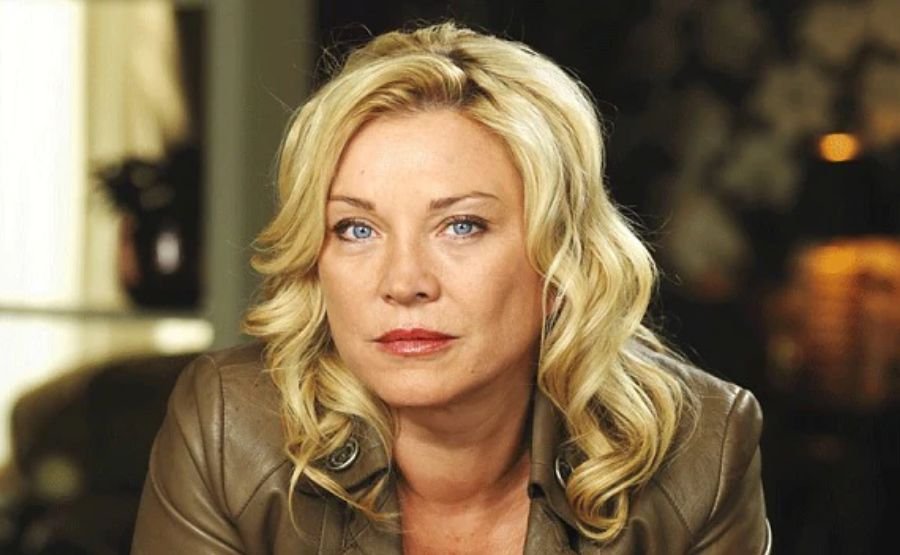
Amanda Redman Net Worth: How Much Is the New Tricks Star Worth in 2026?
Quick Bio
| Detail | Information |
| Full Name | Amanda Jacqueline Redman |
| Born | 12 August 1957 |
| Birthplace | Brighton, East Sussex, England |
| Nationality | British |
| Occupation | Actress, Drama Teacher, School Founder |
| Best Known For | New Tricks (BBC), The Good Karma Hospital (ITV), At Home with the Braithwaites |
| Training | Bristol Old Vic Theatre School |
| Marriages | Robert Glenister (1984–1992); Damian Schnabel (2010–present) |
| Children | One daughter, Emily Glenister |
| Honour | MBE, 2012 Queen’s Birthday Honours |
| Estimated Net Worth | Approx. £2–5 million (various estimates) |
| Years Active | 1975–present |
Who She Is and Why Her Story Matters
There are actors who drift through a career collecting credits, and then there are actors who leave an impression so deep that audiences feel they actually know them. Amanda Redman belongs firmly in the second group.
For close to five decades, she has worked steadily across British television, theatre, and film — never chasing the kind of fame that burns bright and fades, but building something more durable: a reputation. People who watched her command the screen in New Tricks trusted her. People who followed her across the sun-baked landscape of The Good Karma Hospital admired her. She brought weight to every character she played, and that weight came from somewhere real.
What makes Amanda Redman’s story worth telling is not just the career. It is the journey that runs underneath it — a childhood scarred by genuine trauma, a professional life built with patience and craft, and a personal world marked by love found, love lost, and love found again. She is, in the truest sense, someone who earned everything she has.
See also “Jay Harrington Net Worth: How Much Is the S.W.A.T. Star Worth in 2026?“
Childhood and Early Years
Amanda was born in the coastal town of Brighton on a summer’s day in August 1957. Her parents were Ronald Jack Redman and Joan Beryl Redman, an ordinary English couple raising their children in Sussex. By most accounts, her early home was a warm one.
But something happened when Amanda was barely more than a toddler — around fifteen months old — that would mark her permanently. A pot of boiling soup, the kind of domestic hazard no parent could fully anticipate, was pulled over and scalded her. The burns covered an extraordinary portion of her small body. She was rushed to Queen Victoria Hospital in East Grinstead, where medical staff worked frantically to save her life. The situation was so grave that she was, at one point, declared clinically dead.
She survived. But the road back was long and gruelling. Amanda spent the better part of her first five years of life cycling in and out of hospital, undergoing plastic surgery performed by surgeons trained in the tradition of Archibald McIndoe — the celebrated wartime doctor who rebuilt the faces and hands of Royal Air Force pilots burned in combat. It was meticulous, painful, slow work.
The most visible legacy of that accident is a significant scar on her upper left arm. She has never hidden it. In interviews across the years, she has spoken about it with the kind of matter-of-fact honesty that suggests a person who long ago made peace with something difficult. The scar became part of who she was — not a flaw to disguise but a detail of her history, worn plainly.
Her father, Ronald, died in 1980 when Amanda was twenty-three. Her mother, Joan, passed away in 2014. Her brother Tim also died in 2008. She has known grief in close succession.
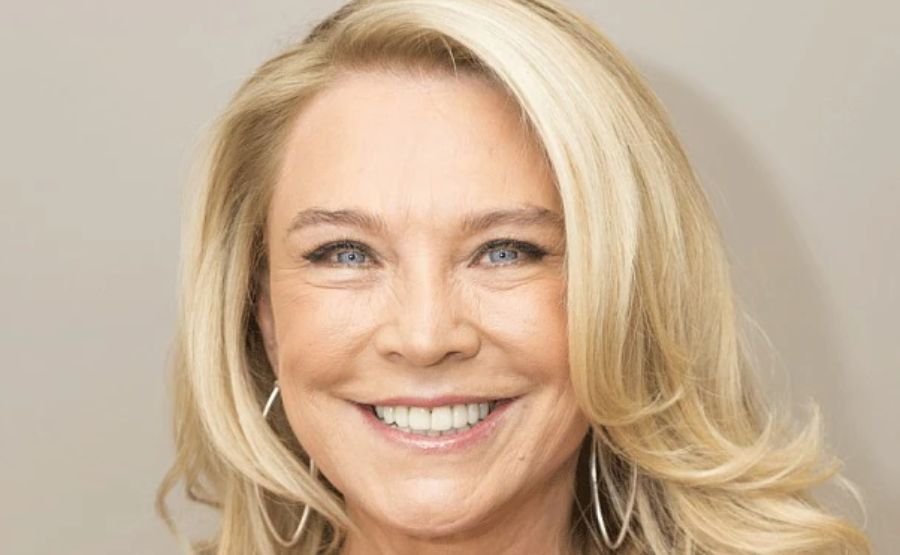
Schooling and Formal Education
Amanda showed a pull towards performance early. There is something almost logical about a child who spent years in hospital — learning to manage pain, enduring the strange world of medical institutions, watching adults around her navigate crisis — later gravitating towards a craft built on emotional truth and controlled vulnerability.
When the time came to pursue acting seriously, she chose one of Britain’s most demanding drama programmes: the Bristol Old Vic Theatre School. This is the kind of institution that does not simply teach students to recite lines. It shapes actors from the inside out, demanding rigour, physicality, classical grounding, and the willingness to be uncomfortable in front of an audience.
The year Amanda studied there, the cohort happened to include a handful of names who would go on to become among the most celebrated in British and international cinema. Daniel Day-Lewis — who would eventually win three Academy Awards — was a classmate. So was Miranda Richardson, later a BAFTA winner and Oscar nominee. Greta Scacchi, who became internationally famous through White Mischief and Gosford Park, was also in that group.
It is a remarkable year to have belonged to, and it tells you something about the calibre of training the school offered — and the calibre of the people drawn to it.
First Steps in Her Career and How She Rose
Amanda entered professional work in the mid-1970s, taking early television roles in an industry that was not always welcoming to young women without established connections. The work was real, if modest — small parts that required her to show up, know her craft, and not embarrass herself. She did considerably better than that.
Through the early 1980s, she began building a proper résumé. She appeared in the BBC Shakespeare adaptation of Pericles, Prince of Tyre in 1984, playing Marina — a role that demanded classical precision. That same year she appeared in Oxbridge Blues, a BBC mini-series. Small screen work in Oscar Wilde’s The Importance of Being Earnest followed in 1986, where she played Gwendolen, a role that calls for quick comic timing underneath a veneer of polished propriety.
Film work came in too. She appeared in Richard’s Things in 1981 and had a part in the Paul McCartney musical film Give My Regards to Broad Street in 1984. In 1988 she appeared in the film For Queen and Country, a serious drama about race and belonging in post-Falklands Britain, starring alongside Denzel Washington.
Her stage career ran alongside all of this. She played Janet in a touring production of The Rocky Horror Show in 1985 — proof that she was not afraid to be loose and theatrical when the role called for it.
Biggest Breakthroughs, Awards, and Landmark Moments
The role that genuinely shifted Amanda’s trajectory arrived in 2000. At Home with the Braithwaites was an ITV drama-comedy series about a woman — played by Amanda — who secretly wins a lottery jackpot and tries to do good with the money without her family finding out. It was sharp, warm, and funny, and Amanda’s performance was the engine of it. The show ran until 2003 and earned her a BAFTA Television Award nomination for Best Actress. The nomination said plainly what viewers already knew: this was someone operating at the top of her game.
Then came New Tricks.
In 2003, the BBC launched what would become one of its most enduringly popular crime dramas. The premise was clever: a team of retired, somewhat chaotic detectives brought back to help solve cold cases, overseen by a driven, sharply intelligent superintendent who had to manage their eccentricities while also fighting her corner in a male-heavy institution. That superintendent was Detective Superintendent Sandra Pullman, played by Amanda Redman.
The show ran for over a decade, and for the first ten years of its life, Amanda was its anchor. Sandra Pullman was exacting, funny when the script allowed it, and emotionally complex — a woman navigating professional ambition and personal life simultaneously. Amanda played her with a kind of grounded authority that made the character completely believable. The show was beloved by audiences and consistent in its ratings.
She left New Tricks in 2013 after a decade, and the move freed her for what turned out to be another career highlight. From 2017 she played Dr. Lydia Fonseca in ITV’s The Good Karma Hospital, a drama set at a medical clinic in rural India (filmed in Sri Lanka). The show was warmer and more emotionally generous than New Tricks, and Amanda’s performance as the no-nonsense, fiercely capable doctor running the place was one of her finest. The series ran until 2022 and reached audiences far beyond Britain.
Elsewhere in her career, the 2000 film Sexy Beast gave her a memorable supporting role opposite Ray Winstone and Ben Kingsley in a sharp, violent British crime picture that earned considerable critical attention. She appeared in Little Dorrit in 2008. She was nominated again for a BAFTA in 2014 for Tommy Cooper: Not Like That, Like This, a biographical drama about the beloved British comedian.
In 2012 she was awarded the MBE — Member of the Order of the British Empire — in the Queen’s Birthday Honours, recognising her services both to drama and to charitable work. In 2024 she was appointed an Honorary Bencher of Middle Temple, a distinction usually reserved for those who have made significant contributions to public life.
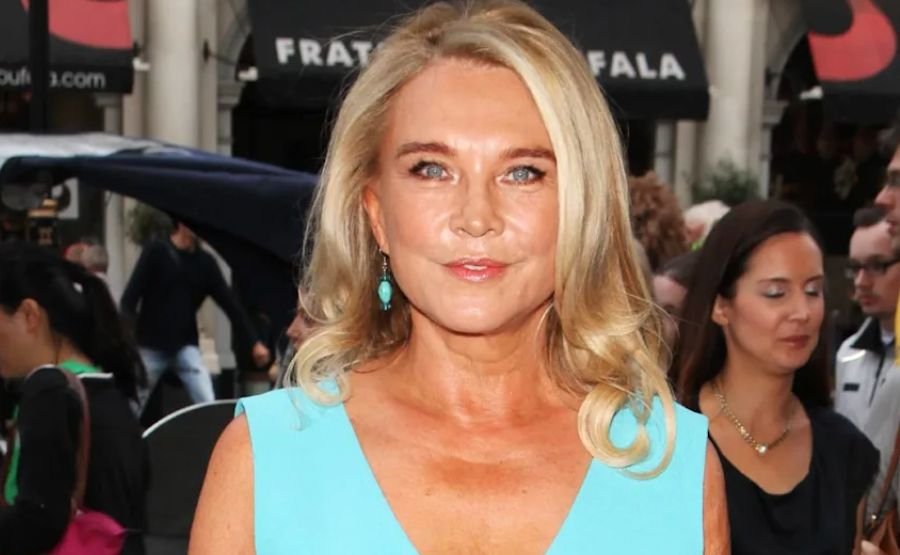
Private Life
Amanda married actor Robert Glenister in 1984. Together they had one daughter, Emily Glenister, who grew up around the theatre and eventually followed her mother into acting. The marriage ended in divorce in 1992.
The break-up of a marriage is rarely simple, and Amanda navigated that period while continuing to work. She and Robert remained connected through Emily, and the co-parenting arrangement seems to have been functional. Amanda has spoken warmly in interviews about her relationship with her daughter, describing a closeness and openness that clearly matters to her deeply. When Emily appeared alongside her mother in an episode of New Tricks, it was one of those moments that felt quietly lovely — two generations of the same family sharing a scene.
After her first marriage ended, Amanda’s personal life took various turns. She met Damian Schnabel — a former mobile phone designer who is fifteen years her junior — in 1999. The two dated, separated after about four years, and Amanda had a subsequent relationship with actor Adam Rayner that lasted around eighteen months. Then she and Damian found their way back to each other in 2006.
They married in September 2010 at Maunsel House in Somerset, a celebration attended by two hundred guests. By all accounts it was exactly the kind of occasion that suggests two people who knew, this time, that they had got it right.
Hard Times and Setbacks
The childhood burns were the defining hardship of Amanda’s early life, and their shadow was long. Surgery after surgery during her most formative years, the permanent mark on her arm, the knowledge that she had nearly died before she had a chance to live — these are not small things to carry.
Beyond the physical, she has spoken publicly about the emotional toll of those years. Grief visited her repeatedly in adulthood: her father left when she was barely out of her twenties, her brother in 2008, her mother in 2014. Loss has been a recurring companion.
She turned down the role of Elsa in Indiana Jones and the Last Crusade in 1989 because of a fear of rats — a small detail that is both amusing and humanising. Even at the height of opportunity, she had her limits, and she respected them.
In her professional life she has spoken frankly about the way the industry treats women, particularly as they age. The disappearing roles, the narrowing of what is offered — these are realities she has not pretended away. She has navigated them by keeping her skills sharp, staying connected to theatre, and founding her own school, which gave her a space entirely on her own terms.
Money and Net Worth — The Honest Picture
Amanda Redman is not one of those celebrities whose financial life becomes a public spectacle. She does not appear on rich lists or in features about celebrity mansions. Her wealth, such as it is, has been built the way most working actors build it: slowly, across decades of consistent employment.
Various sources estimate her net worth somewhere between £2 million and $5 million (roughly £4 million at current exchange rates). These are estimates, not verified figures. Celebrity net worth numbers are notoriously unreliable — they tend to be guesswork dressed up in authoritative language, and the truth is that nobody outside of Amanda’s accountant knows precisely what she is worth.
What can be said with confidence is this: she has worked nearly continuously for fifty years in a profession where most people struggle to last five. She headlined a BBC drama for a decade. She headlined an ITV drama for five years after that. She has done extensive theatre. She has film credits. She founded and runs a drama school. She has been recognised by the Crown and by legal institutions for her contributions.
The money that flows from all of that — salaries, residuals, school income, and any investments she has made along the way — has clearly provided her with a comfortable, secure life. She is not ostentatiously wealthy in the way that some entertainers are. She is something more quietly satisfying: financially stable because she was consistently good at what she chose to do.
What She Is Doing Now and How She Lives Today
At sixty-eight, Amanda Redman is still working. In 2024 she appeared in the Netflix film Scoop, playing a character named Netta McAlister in a drama centred on the royal family scandal involving Prince Andrew. The film reached a global audience and introduced her to viewers who may have known her name but not her face.
In 2025 she took on the role of Audrey Clement in Murder Before Evensong, a Channel 5 drama adapted from the Reverend Richard Coles’ bestselling novel. Set in the 1980s, the six-part series features her playing the mother of the main character — a rector who stumbles into a murder investigation. The role allowed her to bring the kind of authority she has always excelled at to a new setting and a new audience.
Beyond performing, Amanda continues to run the Artists Theatre School, which she founded. Based at Ealing Studios, the school offers drama teaching on Saturdays to students ranging from young children to adults. She directs an annual production performed at The Questors Theatre. It is work she clearly finds meaningful — a way of passing forward what was passed to her at Bristol.
She lives what appears, from the outside, to be a full and well-grounded life. She is married to Damian Schnabel. She is close to her daughter Emily. She acts, she teaches, and she does charitable work. In 2024 she became a trustee of the Royal Theatrical Fund, an organisation that supports theatre professionals who have fallen on hard times.
Final Words
There is a particular kind of career that gets undervalued in cultures that are obsessed with overnight success stories. Amanda Redman’s career is one of those. It doesn’t have a single defining moment of explosive arrival — it has something better. It has fifty years of showing up and being excellent, building role upon role until the body of work speaks for itself.
She survived something as a toddler that should have killed her. She learned her craft at one of Britain’s finest drama schools, alongside people who went on to become legends. She built a career through sheer persistence in an industry not known for its generosity. She raised a daughter, endured grief, found love twice, lost it once, and found it again. She turned down a Hollywood opportunity because of a rat phobia, and she has no reason to regret it.
What she leaves behind is a body of work that genuinely mattered to people — Sandra Pullman, Dr. Fonseca, Alison Braithwaite, all of them characters who felt like real women navigating real lives. And she leaves the drama school, the next generation of actors learning in a space she created.
Amanda Redman is proof that the most lasting careers are not the loudest ones. They are the ones built on craft, resilience, and the quiet refusal to stop.
See also “Spectacular Smith Net Worth: How He Built a $120 Million Empire“
FAQs
1. When and where was Amanda Redman born?
Brighton, East Sussex, England, is where she was born on August 12, 1957.
2. What happened to her as a toddler?
When she was around fifteen months old, she pulled a pot of boiling soup over herself, suffering burns to approximately 75% of her body. She was pronounced clinically dead at one point and spent much of her first five years in hospital recovering through multiple surgeries.
3. Where did she train as an actress?
She trained at the Bristol Old Vic Theatre School, one of the most respected drama institutions in the United Kingdom. Her classmates there included Daniel Day-Lewis, Miranda Richardson, and Greta Scacchi.
4. What is Amanda Redman’s most famous role?
Most people know her best as Detective Superintendent Sandra Pullman in the BBC One crime series New Tricks, a role she played from 2003 to 2013.
5. What other major television roles has she had?
She played Alison Braithwaite in At Home with the Braithwaites (2000–2003) and Dr. Lydia Fonseca in The Good Karma Hospital (2017–2022), both of which brought her BAFTA nominations and wide audience affection.
6. Has she won any major awards?
She was nominated for two BAFTA TV Awards: Tommy Cooper: Not Like That, Like This and At Home with the Braithwaites. She won the Chlotrudis Award for Best Supporting Actress in 2002. She was appointed MBE in 2012 for services to drama and charity.
7. Who has she been married to?
From 1984 till 1992, she was wed to actor Robert Glenister. She married her second husband, Damian Schnabel, in September 2010. Schnabel is fifteen years younger than her.
8. Does she have children?
Yes. She has one daughter, Emily Glenister, from her marriage to Robert Glenister. Emily has also pursued acting and appeared alongside her mother in an episode of New Tricks.
9. What is her estimated net worth?
Estimates vary, but most sources place her net worth somewhere between £2 million and $5 million (approximately £4 million). These figures are estimates, not verified disclosures, but they reflect a long and productive career in British television, theatre, and film.
10. What has she been doing recently?
She appeared in the 2024 Netflix film Scoop and starred in the 2025 Channel 5 drama Murder Before Evensong. She also became a trustee of the Royal Theatrical Fund in 2024 and was appointed an Honorary Bencher of Middle Temple.
11. Does she run a drama school?
Yes. She is the founder and principal of the Artists Theatre School, which operates out of Ealing Studios and teaches drama to students of all ages, from young children to adults. She directs an annual show at The Questors Theatre.
12. Why did she decline a role in Indiana Jones and the Last Crusade?
She was offered the role of Elsa but turned it down because of a genuine fear of rats — the film’s production was known to involve them extensively in certain sequences.
Step into a world of captivating stories with The Charm Magazine.